πŸŽ“StudentHub ✦ phyrenix.com
✦ 17 STUDENT TOOLS · FREE INSTANT ANSWERS

Student answers that stretch the student budget.

Term budget maths, cost-per-lecture honesty, part-time work balance, semester planning, assignment timing and accommodation comparisons β€” type your student question and get a straight answer in seconds, with real numbers you can plan a term around. The full detailed report costs less than a coffee: $2.95.

17 toolsFree instant local answers β‰ˆ one coffee ($2.95) for the full reportNo sign-up Β· No spam Β· Educational

Exam Revision Schedule: Active Recall Run-In Plan

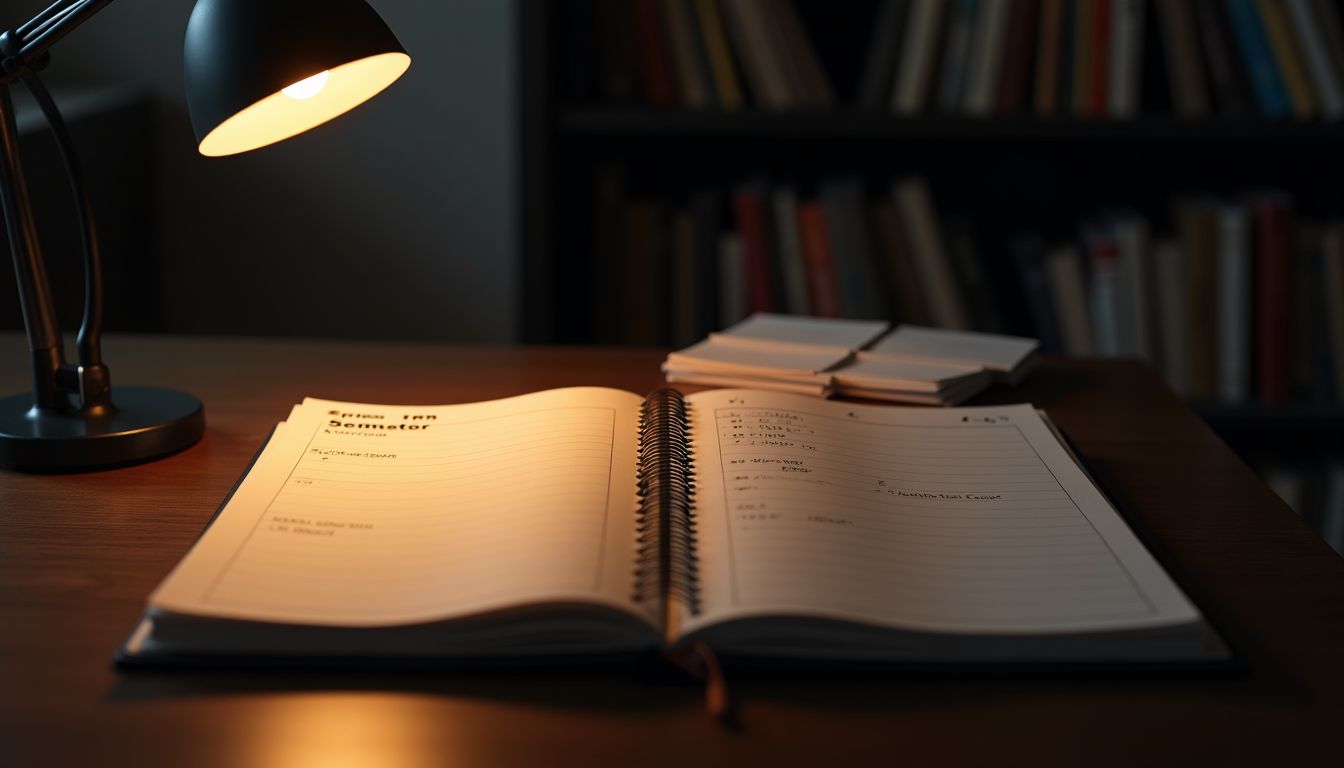
An open semester planner with highlighted dates and a neat stack of flashcards under warm amber lamplight on a dark desk, deep charcoal tones β€” study time and semester planning guide

Revision fails in two predictable ways: it starts too late, and it is passive β€” re-reading notes that look familiar and teach nothing. This guide builds the version that works: a schedule made weeks out by working backwards from each exam date, organised by topics and past papers rather than vague hours, and built on active recall β€” closed-book self-testing, flashcards and explaining topics aloud β€” which study science consistently shows beats re-reading by a wide margin. Spaced repetition at expanding intervals roughly doubles retention for the same hours, and protecting sleep in the final days measurably improves recall on the day.

⚑ Free instant check

A practical guide to building an exam revision schedule that actually works β€” active recall over re-reading, past papers as the backbone, and a run-in plan that protects sleep instead of sacrificing it.

Answer 0-10 (10 = the stronger end for every question β€” no wrong answers). Your answers stay on this device β€” nothing is stored.

All-nighters before deadlines β€” 5 β€” Planned weeks ahead
Whenever I feel like it β€” 5 β€” A daily routine I keep
Re-reading notes β€” 5 β€” Active recall and past papers
Sleep is optional β€” 5 β€” Protected, even in exam season

Why it matters

  • Active recall beats re-reading by a wide margin on every study-science measure: testing yourself (closed-book questions, flashcards, explaining topics aloud) builds memory that re-reading and highlighting barely touch.
  • Past papers are the single highest-value revision resource β€” they show the format, the repeated topics and the depth expected, and doing them under time is the closest thing to exam rehearsal that exists.
  • Spaced repetition is the scheduling superpower: revisiting material at expanding intervals (day 1, day 3, day 7, day 14) roughly doubles retention compared with massed cramming of the same hours.
  • The run-in week matters more than the month before: sleep in the final days improves recall measurably, while all-nighters before an exam measurably hurt it β€” the revision is done in the weeks, not the night.
  • A schedule built around topics and past papers rather than hours feels more concrete and is easier to keep: 'paper 2023, topics 4-6' beats 'three hours of study'.

Your checklist

  • List every exam with its date, then work backwards week by week.
  • Turn each subject into topics, and mark the ones you have never properly learned β€” they need the earliest slots.
  • Make past papers the backbone: one per subject early to diagnose, more later under timed conditions.
  • Schedule active recall sessions (self-testing, flashcards) for every topic block.
  • Plan spaced repeats: each topic revisited 3-7 days after first learning.
  • Protect the final two days: light review and full sleep, not new material.
  • Re-plan after any slip β€” a schedule that survives real life beats a perfect one that does not.

❓ Exam Revision Schedule: Plan the Run-In β€” FAQ

Why is active recall better than re-reading?

Because retrieving information strengthens the memory in a way that recognising it does not β€” re-reading feels productive while teaching little. Testing yourself closed-book, even badly, builds the retrieval paths the exam actually uses.

How do past papers fit into a revision schedule?

They are the backbone: one paper early per subject to diagnose what you do not know, then timed papers in the final weeks as rehearsal. Past papers show the format, the repeated topics and the depth expected better than any other resource.

Should I revise the night before an exam?

Light review and full sleep beat last-minute cramming β€” sleep consolidates memory and all-nighters measurably hurt recall the next day. The revision is done in the weeks before; the final night is for trusting the work you put in.

πŸŽ“ All student tools

Every tool answers instantly from our own knowledge and calculators β€” no AI wait, no account. Honest maths and plain guidance, always educational and never preachy: the student years are for learning how to handle money, time and decisions, and these tools exist to make that easier β€” not to sell you anything. Results are estimates and reflections, not guarantees, and nothing you type is stored. Want the deeper, personalised version? Each has a $2.95 full report.

πŸ’° Term Money
πŸ“š Study Time
🎯 Life & Next Steps
Educational information only — not financial, legal or academic advice, and never a guarantee of outcomes. Costs, timetables and degree requirements vary by institution and country: the tools give estimates and reflections to guide planning, not promises. Always check official sources β€” your student services and financial aid office β€” before signing, borrowing or committing. Refunds honoured.
Β© 2026 Student Hub Β· part of the phyrenix.com network Β· WebMCP manifest Β· tools.json
Explore Student: Guides